
Introductions: Distraction can be used to prevent mild anxiety from escalating. Find out which toys, games and sniffing activities really work – and when distraction doesn’t. From PetCare Opportunity.
Distraction Techniques for Anxious Dogs: Toys, Games, Sniffing
In This Article:
- When Distraction Works (And When It Fails)
- Best Distraction Toys for Anxious Dogs
- Sniffing Games (Most Effective)
- Interactive Games That Lower Stress
- What to Do When Distraction Fails
- Distraction vs. Medication
- Frequently Asked Questions
Your dog starts lip licking and yawning during a storm. You grab a toy. They ignore it. You offer cheese. They refuse.
At PetCare Opportunee, we know that distraction works for mild anxiety – but fails completely for panic.
Here is how to use distraction effectively, and when to stop trying.
When Distraction Works (And When It Fails)
Works for:
- Mild anxiety (lip licking, yawning, whale eye, ears back)
- Anticipatory anxiety (pacing before a storm starts)
- Situational nervousness (vet waiting room, car ride)
- Boredom or mild restlessness
Fails for:
- Severe panic (trembling, drooling, hiding, freezing)
- Any dog who refuses high‑value treats (chicken, cheese)
- Separation anxiety (panic when you leave)
- Noise phobia during peak thunder/fireworks
PetCare Opportunee rule: If your dog will not take a piece of chicken, they are past the point of distraction. Stop trying to play. Focus on safety and medication.
Best Distraction Toys for Anxious Dogs
1. Stuffed Kong
Fill with peanut butter (no xylitol), wet food, yogurt, or mashed banana. Freeze for longer lasting. Give before the trigger starts.
Why it works: Licking is naturally calming. The repetitive tongue motion lowers heart rate.
2. LickiMat
A silicone mat with ridges. Spread soft food, peanut butter, or yogurt. The dog licks to get the food out.
3. Snuffle mat
A mat with fabric strips. Hide kibble or small treats. Your dog sniffs to find them. Sniffing lowers cortisol.
4. Puzzle toys
Nina Ottosson style—hide treats under sliders, drawers, or cones. The mental work distracts from the trigger.
5. Treat‑dispensing ball
Kong Wobbler, PetSafe Busy Buddy, or similar. Dog rolls or nuzzles to release kibble.
PetCare Opportunee tip: Rotate toys. An anxious dog gets bored of the same toy. Have 3–4 and cycle them.
Sniffing Games (Most Effective)
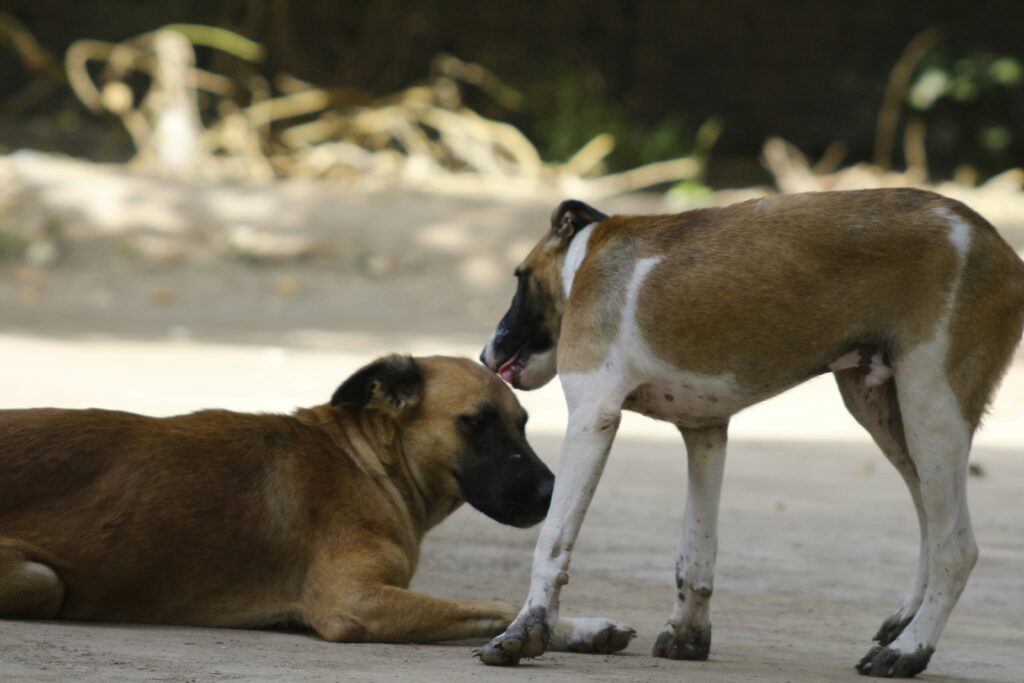
Dogs sniffing each other.
Sniffing is biologically calming. It lowers heart rate and shifts the brain from panic mode to exploration mode.
Game 1: Find it
Hide small treats around a room (easy spots first). Say “find it.” Dog sniffs and searches. Start with treats in plain sight, then behind furniture, under pillows.
Game 2: Treat trail
Create a trail of treats leading to a larger reward. Dog follows their nose. The trail can be short (across the floor) or long (room to room).
Game 3: Box of fabric
Take a cardboard box. Fill with old t‑shirts, towels, or fabric scraps. Sprinkle treats inside. Dog digs and sniffs to find them.
Game 4: Sniffari walk
A slow, unstructured walk on a long line (15–30 feet). Dog chooses where to go, how long to sniff. No pulling, no destination. 20 minutes of sniffing is more calming than 60 minutes of forced walking.
PetCare Opportunee insight: Sniffing games work for mild to moderate anxiety. For severe panic, the dog cannot focus. Do not force sniffing – it will not work.
Interactive Games That Lower Stress
1. Nose work (formal)
Teach your dog to find a specific scent (birch, anise, clove). You can buy a kit online. The concentration required lowers anxiety. Good for dogs with generalized anxiety.
2. Trick training
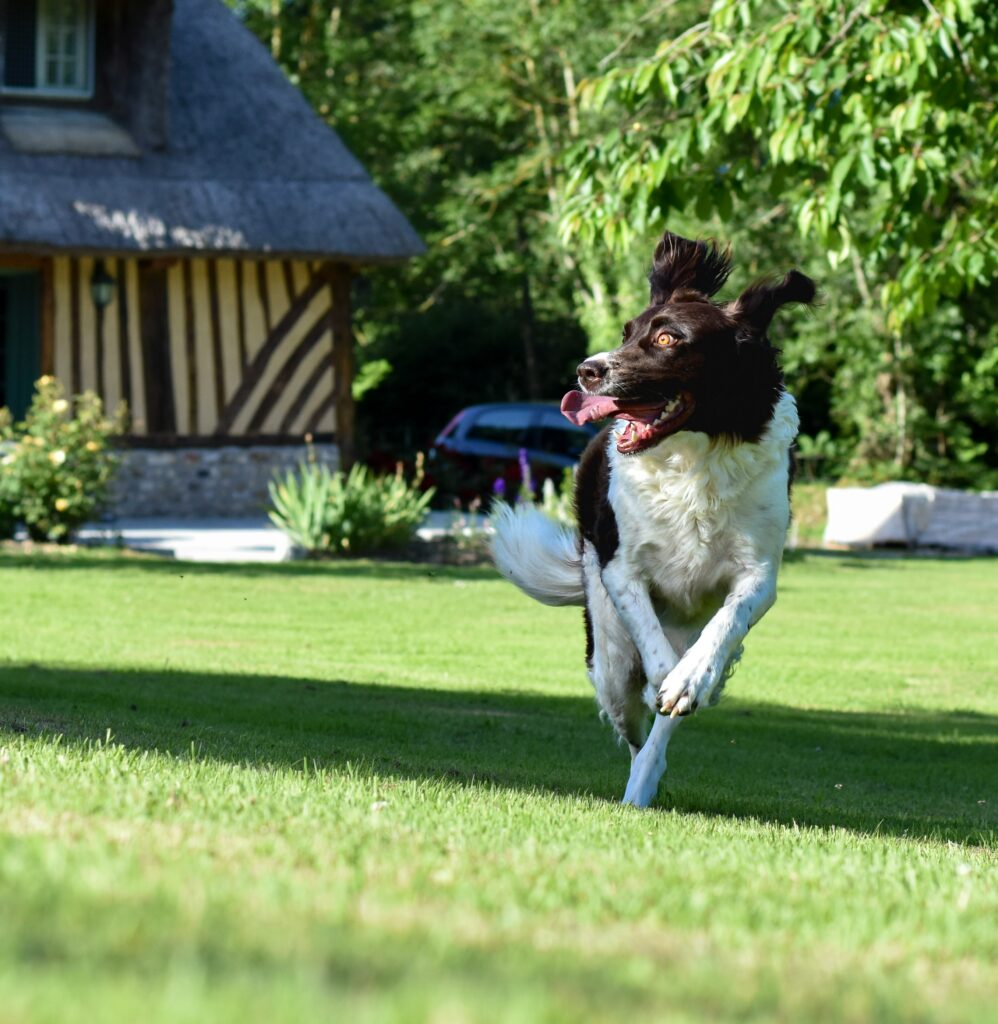
Simple tricks (touch, spin, weave through legs). Mental engagement distracts from mild triggers. Keep sessions short (2–3 minutes).
3. Scatter feeding
Instead of a bowl, scatter kibble across the floor or grass. Your dog sniffs and finds each piece.
4. Shell game
Hide a treat under one of three cups. Let your dog flip the cups to find it. Use easy mode (let them see which cup) then harder.
PetCare Opportunee tip: Use high‑value treats (chicken, cheese) for anxiety distraction. Regular kibble is not motivating enough when your dog is nervous.
What to Do When Distraction Fails
Distraction fails when your dog is already panicking or when the trigger is too intense.
Signs distraction has failed:
- Dog refuses treats (even chicken)
- Dog cannot focus – eyes darting, panting, trembling
- Dog hides or tries to escape
- You have tried 3 different toys/games with no engagement
What to do instead:
- Stop trying to distract. You are adding pressure.
- Remove the trigger if possible (close curtains, turn off vacuum, send visitor away).
- Move your dog to a safe space (interior room, crate with door open, bed in a closet).
- Turn on white/brown noise or calming music.
- If your dog has prescription medication (trazodone, alprazolam, gabapentin), give it as directed.
- Sit quietly. Do not talk. Do not try to pet or hold.
PetCare Opportunee rule: Distraction works when your dog is in yellow zone (mild to moderate stress). It fails when your dog is in red zone (panic). Learn the difference.
Distraction vs. Medication
| Distraction | Medication | |
|---|---|---|
| Mild anxiety | Works well | Not needed |
| Moderate anxiety | May help, may not | Often needed |
| Severe panic | Does not work | Essential |
| Onset | Immediate (if works) | 30–90 min (trazodone), 4–6 weeks (fluoxetine) |
| Cost | $10–50 one time | $10–30/month |
| Use for separation anxiety | No | Yes |
| Use for noise phobia (severe) | No | Yes |
PetCare Opportunee recommendation: Use distraction for mild situational anxiety (car rides, vet waiting room, a single loud noise). Use medication for anything that causes panic, destructiveness, or self‑injury.
Frequently Asked Questions
My dog loves his Kong, but during storms he ignores it. Why?
Because the storm is more distressing than the Kong is rewarding. He is in panic mode. Do not force it. Use medication for storms, then offer the Kong as an extra layer – not the main treatment.
How do I teach my dog “find it” for anxiety?
Start in a calm room. Say “find it” and toss a treat on the floor. Dog eats it. Repeat. Then hide treats a few feet away. Say “find it.” Dog sniffs and finds. Practice daily during calm times. Then use the cue when you see early anxiety signs (lip lick, whale eye).
Can I use distraction during separation anxiety training?
Yes, but only when your dog is under threshold (calm enough to eat). Leave a stuffed Kong when you practice fake departures. If your dog ignores the Kong, you left too long. Shorten the duration.
My dog gets more frustrated when I offer a puzzle toy during anxiety. What do I do?
Stop. Some anxious dogs cannot solve puzzles – they become more stressed. Stick to simple sniffing games or a LickiMat. Or skip distraction entirely and focus on safe space and medication.
What is the single best distraction for most anxious dogs?
Sniffing. A treat trail or a snuffle mat. Sniffing is biologically calming, requires no training, and works for many mild to moderate anxiety cases. Start there.
