

Introduction:
Early recognition of dog anxiety is critical to preventing serious distress. Here are 5 vet-checked signs from PetCare Opportunee to be sure.
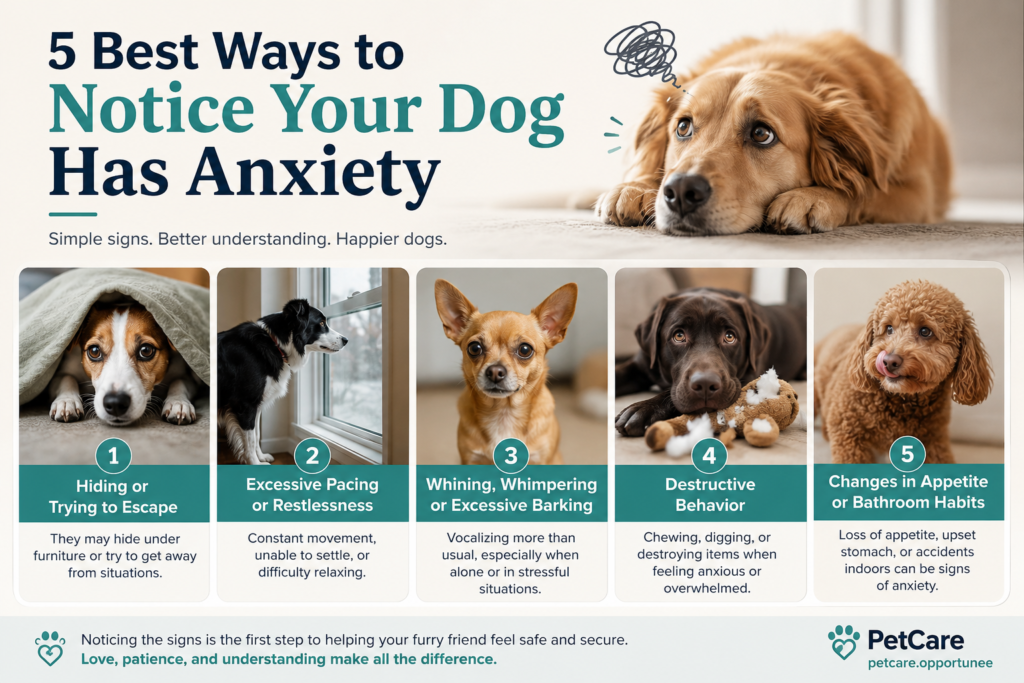
5 Best Ways to Notice Your Dog Has Anxiety
In This Article:
- 5 Signs of Dog Anxiety
- What Triggers Your Dog’s Anxiety?
- How Long Have Signs Been Occurring?
- When to Call the Vet
- Next Steps from PetCare Opportunee
Recognizing dog anxiety early prevents it from escalating into severe distress. At PetCare Opportunee, we help you catch the signs before things get worse.
Here are the top 5 vet-checked signs to watch for.
1. Destructive Behavior & Pacing
Pawing at doors, digging, or chewing exit points like windowsills or door frames – especially when left alone.
What it looks like: Scratched doors, chewed baseboards, torn up bedding near exits.
Not anxiety if: Your puppy is teething (2–6 months old) or bored with no toys and no exercise.
2. Indoor Potty Accidents
Sudden urination or defecation inside the house by an otherwise house-trained dog.
What it looks like: Pee or poop in places your dog never uses – often near doors or windows.
Not anxiety if: Your dog has a urinary tract infection, kidney disease, or is not fully trained yet.
3. Excessive Vocalization
Prolonged barking, whining, or howling that seems to self-soothe or react to triggers.
What it looks like: Non-stop barking when you leave. Whining that continues for hours. Howling with no apparent reason.
Not anxiety if: Your dog is alerting you to a real visitor or danger, or simply wants food or attention.
4. Body Language Shifts
Tucked tails, pinned-back ears, dilated pupils, or showing the whites of their eyes (often called whale eye).
What it looks like: Tail between legs. Ears flat against head. Eyes wide with white showing.
Not anxiety if: Your dog is sleeping, relaxed, or gives a quick tail tuck after a loud noise then recovers normally.
5. Physical Signs of Stress
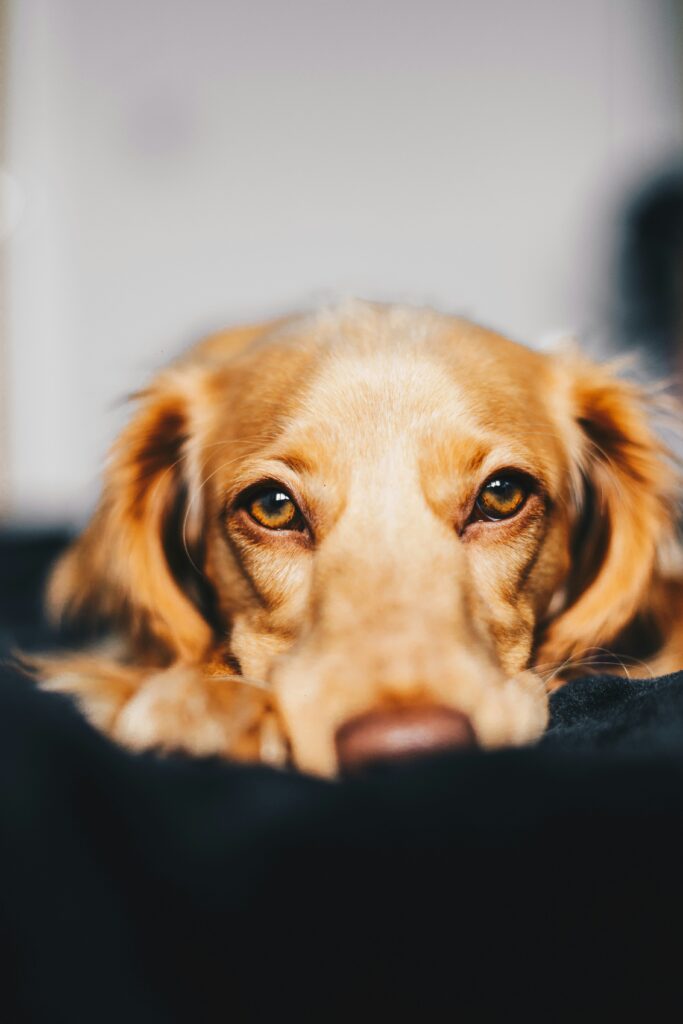
Excessive panting, drooling, lip-licking, or intense trembling when there is no heat or physical exertion.
What it looks like: Panting in a cool room. Drooling puddles. Licking lips over and over. Shaking like they are cold – but are not.
Not anxiety if: It is hot outside, your dog just exercised, or they have a medical condition like nausea, fever, or pain.
What Triggers Your Dog’s Anxiety?
To help narrow down the specific type of anxiety your dog might have, ask yourself what triggers seem to spark these behaviors the most.
Common triggers include:
- Loud noises – thunder, fireworks, vacuum cleaners
- Being left alone – even for a few minutes
- Meeting new people or dogs
- Car rides or vet visits
- Changes in routine or home
PetCare Opportunee recommends keeping a simple 3-day trigger log. Just write down what happened right before each anxious episode.
How Long Have These Signs Been Occurring?
Another clue for your vet is the timeline.
- Less than 1 week – Could be a one-time trigger or minor illness
- 1 to 4 weeks – Likely a new anxiety developing
- 1 to 6 months – Established anxiety that needs treatment
- 6 months or more – Chronic anxiety, may require medication
When to Call the Vet
Call your vet within 48 hours if your dog shows 3 or more signs from above, the behavior started suddenly within days, or it happens every time a specific trigger appears.
Call an emergency vet today if your dog has sudden anxiety along with vomiting or diarrhea, sudden anxiety with circling or head pressing, or if your dog is hurting themselves – chewing paws raw or breaking teeth on a crate.
Next Steps from PetCare Opportunee
You have identified the signs. Now what.
First, call your vet to rule out pain or medical causes. Second, start a simple symptom log – write down triggers, signs, and how long each episode lasts. Third, do not punish. Anxiety is not defiance. Punishment makes it worse. Fourth, create a safe space for your dog – a dark room with a bed and white noise. Finally, read our next guide on the difference between anxiety and bad behavior.
Frequently Asked Questions
Can a dog have anxiety without destroying things?
Yes. Some dogs freeze, hide, or show only body language signs like a tucked tail, whale eye, or ears back. They are still anxious – just quiet about it.
How do I know if it’s anxiety or pain?
Pain often has one position of discomfort, like holding up a paw or arching their back, or they may yelp when touched. Anxiety is more general – pacing, panting, hiding. But they overlap. Your vet can help tell them apart.
Should I comfort my anxious dog?
Yes. Research shows comforting does not reinforce anxiety. It actually lowers cortisol. Comfort your dog.
