

Introduction:
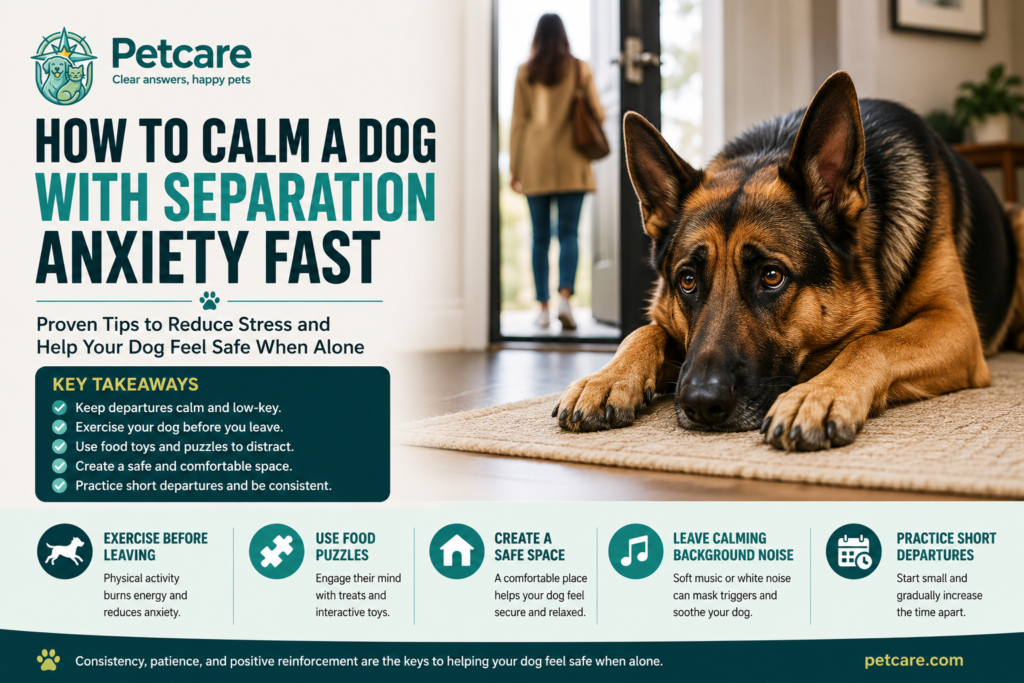
To help a dog with separation anxiety exercise them before you leave, provide enrichment toys, create a safe space, and keep departures low-key. These techniques might help relieve stress in the moment, but to improve the situation long term you will have to gradually teach your dog to be comfortable when he is alone.
How to Calm a Dog With Separation Anxiety Fast
Key Takeaways
- Separation anxiety is one of the most common causes of stress in dogs.
- Punishment does not help and often makes anxiety worse.
- Creating a predictable departure routine can reduce panic.
- Mental stimulation before leaving helps many dogs settle faster.
- Severe separation anxiety usually requires gradual training, not quick fixes alone.
Few things are harder for dog owners than watching their dog panic the moment they leave the house.
Some dogs bark nonstop. Others chew furniture, scratch doors, pace around the home, or even injure themselves trying to escape.
While separation anxiety cannot be cured in five minutes, there are several ways to calm your dog quickly and reduce the stress they feel when you’re away.
The sooner you understand what triggers the anxiety, the easier it becomes to help your dog feel safe and confident.
What Is Separation Anxiety?
Separation anxiety occurs when a dog becomes distressed after being separated from a person they are strongly attached to.
This goes beyond simply missing you.
Dogs with true separation anxiety often experience genuine panic when left alone.
The behavior usually starts within minutes of departure.
Common signs include:
- Excessive barking or whining
- Scratching doors and windows
- Destructive chewing
- Pacing
- Drooling
- Accidents in the house
- Following you constantly before departure
Some dogs begin showing anxiety as soon as they notice signs that you’re preparing to leave.
They may react when you pick up your keys, put on shoes, or grab a bag.
Why Dogs Develop Separation Anxiety
There isn’t always one clear cause.
However, separation anxiety is more common in dogs that have experienced:
- Rehoming
- Shelter stays
- Major routine changes
- Loss of a family member
- Moving homes
- Long periods of constant companionship
Many dogs become highly dependent on their owners without realizing how to relax independently.
How to Calm a Dog With Separation Anxiety Fast
1. Exercise Before You Leave
A dog with excess energy has more fuel for anxiety.
A brisk walk, game of fetch, or active play session before departure can make a noticeable difference.
Physical activity helps:
- Burn excess energy
- Reduce stress hormones
- Encourage relaxation afterward
Even 20 to 30 minutes can help many dogs settle more easily.
2. Avoid Making Departures Emotional
Many owners accidentally increase anxiety.
They spend several minutes saying goodbye, hugging their dog, and repeating phrases like:
“Don’t worry, I’ll be back soon.”
To humans, this feels comforting.
To anxious dogs, it often signals that something important is happening.
Keep departures calm and casual.
Leave without creating a big event.
3. Create a Safe Space
Many dogs feel calmer when they have a familiar place to relax.
This might be:
- A crate (if properly crate trained)
- A quiet room
- A favorite bed
- A designated corner of the house
The goal is to create a predictable environment where the dog feels secure.
4. Use Food-Based Distractions
Food can help redirect attention during the most stressful moments.
Good options include:
- Stuffed KONG toys
- Frozen treats
- Lick mats
- Puzzle feeders
These activities engage the brain and create positive associations with your departure.
For some dogs, the first 15 minutes after you leave are the hardest.
A distraction can help bridge that period.
5. Leave Background Noise
Complete silence can increase awareness of your absence.
Some dogs relax better with:
- Soft music
- Television
- White noise
The sound should be calming, not stimulating.
Many owners report success with soft classical music designed for dogs.
6. Stop Rewarding Clingy Behavior
This doesn’t mean ignoring your dog.
It means encouraging independence.
For example:
Instead of allowing your dog to follow you into every room all day, occasionally encourage them to settle on their own bed.
Confidence grows through practice.
Dogs that learn to relax independently often cope better when left alone.
7. Practice Short Departures
This is one of the most effective long-term solutions.
Leave for:
- 30 seconds
- 1 minute
- 3 minutes
- 5 minutes
Return calmly.
Gradually increase the duration.
The goal is to teach your dog that departures are temporary and predictable.
Mistakes That Make Separation Anxiety Worse
Many well-meaning owners accidentally reinforce anxiety.
Avoid:
Punishment
Your dog is not being stubborn.
They are experiencing stress.
Punishment increases fear and confusion.
Sudden Long Absences
Leaving an anxious dog alone for eight hours without preparation often worsens the problem.
Constant Reassurance
Excessive comforting can sometimes reinforce dependency.
The goal is confidence, not dependence.
When Separation Anxiety Is Severe
Some dogs experience extreme panic.
Signs include:
- Self-injury
- Breaking through doors
- Escaping crates
- Excessive drooling
- Nonstop vocalization
In these cases, professional help may be necessary.
A veterinarian can rule out medical causes and discuss treatment options.
A certified behavior professional can create a customized training plan.
Can Separation Anxiety Be Cured?
Many dogs improve dramatically.
Some recover completely.
Others require ongoing management.
Success depends on:
- Consistency
- Training
- Environment
- Severity of symptoms
The earlier you address the problem, the better the outcome tends to be.
Frequently Asked Questions
How long does separation anxiety last in dogs?
Mild cases may improve within weeks. Severe cases can take several months of consistent training.
Should I crate a dog with separation anxiety?
Only if the dog is already comfortable in the crate. For some anxious dogs, confinement increases stress.
Will my dog grow out of separation anxiety?
Most dogs do not simply outgrow it. Training and behavior modification usually produce the best results.
What’s the fastest way to calm a dog with separation anxiety?
Exercise, food-based enrichment, a calm departure routine, and a safe environment are the quickest ways to reduce immediate stress.
Final Checkings
Separation anxiety can be exhausting for both dogs and owners, but it is manageable.
Focus on helping your dog build confidence rather than simply stopping unwanted behaviors.
Small changes, repeated consistently, often produce the biggest improvements.
Most importantly, remember that your dog is not trying to be difficult. They’re struggling to feel safe when alone. Once you address that fear, real progress becomes possible.
Image suggestions for this article:
- Dog sitting sadly near a closed door (featured image)
- Owner leaving home while dog watches
- Dog using a puzzle feeder or stuffed Kong
- Comfortable dog resting in a safe space
- Dog calmly relaxing after exercise
