

Introduction:
Dogs are often our most loyal companions, but it is incredibly stressful for both of you when they suddenly get anxious for no apparent reason. You might see pacing, excessive barking or even hiding and you might feel lost trying to figure out what the problem is. But you can be sure your dog is seldom anxious without cause. And instead there’s usually a hidden trigger. Something subtle that us humans might not catch. In this guide we’ll look at why sudden dog anxiety can happen, how to identify the root cause and what steps you can take to help your dog feel safe again.
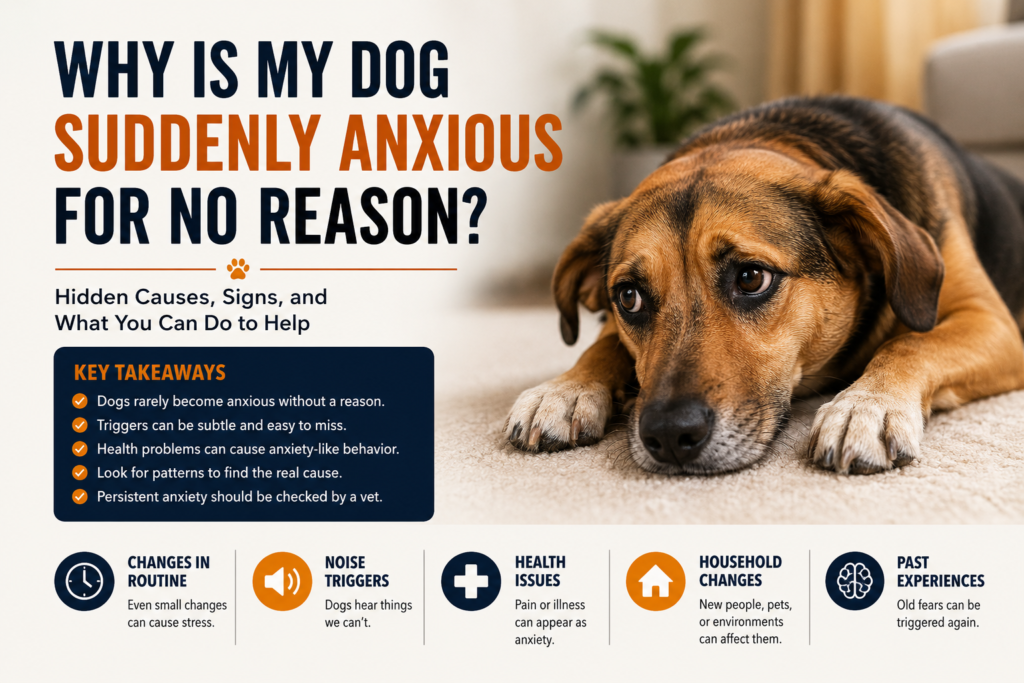
Key Takeaways
- Sudden anxiety in dogs almost always has a trigger, even if it’s not obvious.
- Small changes in environment or routine can cause big emotional reactions in dogs.
- Health issues can also mask as anxiety, so a vet check is crucial if the behavior is sudden or severe.
- Pay attention to patterns: timing, environment, and changes in routine all help you uncover the source of anxiety.
- If it persists, seek professional guidance from a vet or trainer.
Common Reasons Dogs Become Anxious
It can feel baffling when your dog’s behavior changes suddenly—especially if they seemed calm just yesterday. But dogs are surprisingly attuned to their surroundings. Even minor disruptions can spark big emotional reactions. Here are some of the most common reasons:
1. Routine Changes
Dogs thrive on predictability. Small shifts—like a new walking route, a different feeding time, or a change in your work schedule—can disrupt their sense of safety. If something in your routine shifted—even slightly—your dog might be responding to that.
2. New or Unfamiliar Sounds
Dogs hear the world differently. A sound that we dismiss—a distant car, a neighbor’s door, or a high-pitched electronic beep—can feel overwhelming to them. This is why anxiety sometimes appears to come from nowhere—your dog might be reacting to a sound you didn’t even notice.
3. Health-Related Causes
It’s easy to assume that behavioral changes are purely emotional, but sometimes physical discomfort is at play. Pain from joint issues, ear infections, or even digestive problems can manifest as restlessness or irritability. If the anxiety is sudden and sustained, a vet visit is essential.
4. Emotional Triggers from Household Changes
Dogs are deeply connected to their humans, and big changes in the household can affect them. A new baby, a roommate moving out, or a new pet can stir up confusion or insecurity. Even positive changes like these can make a dog feel off balance until they adapt.
5. Past Trauma Being Triggered
Rescue dogs or those with past trauma
