

Introduction:
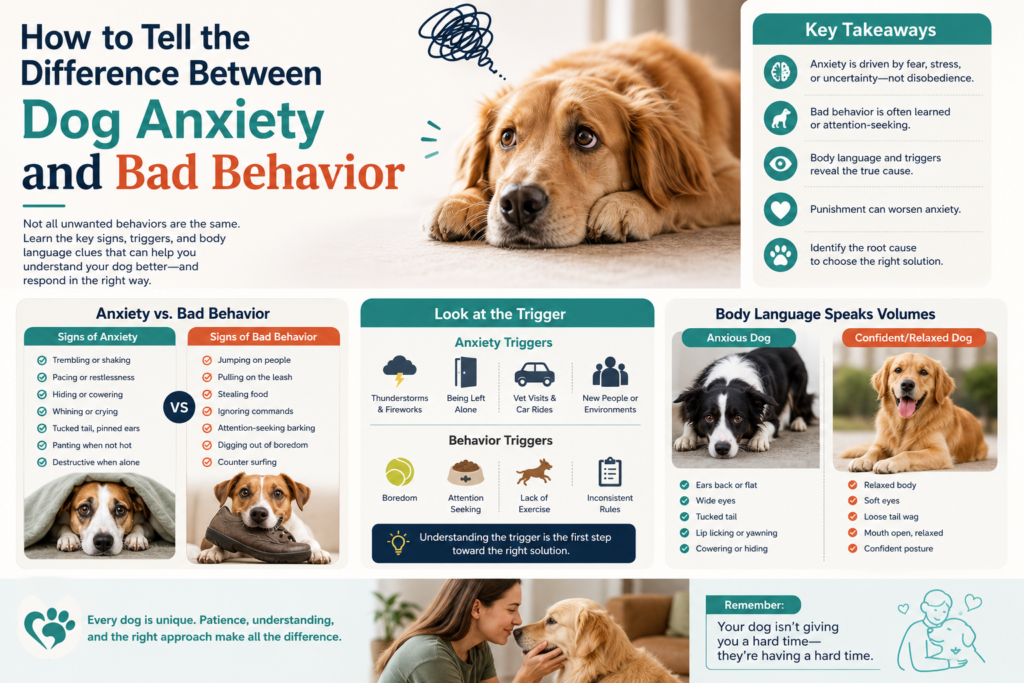
Anxiety driven behaviors are caused by fear, stress or discomfort. Bad behavior is most often linked to lack of training, boredom, excitement or learned behavior. The main distinction is: This difference is important to understand because the wrong answer will make the problem worse, not better.
An anxious dog needs support and reassurance. A dog with bad behavior usually needs training, structure and consistency. Knowing the difference will help you respond appropriately and strengthen the bond with your pet.
Key Takeaways
- Dog anxiety is caused by fear, stress, uncertainty, or emotional distress.
- Bad behavior is often caused by boredom, lack of training, excess energy, or learned habits.
- Body language can reveal whether a dog is anxious or simply testing boundaries.
- Anxiety-related behaviors usually occur around specific triggers such as being left alone, loud noises, or unfamiliar situations.
- Destructive chewing, barking, and house accidents can be symptoms of anxiety rather than disobedience.
- Punishing an anxious dog can increase fear and worsen symptoms.
- Identifying the root cause is essential for choosing the right solution.
Why Understanding the Difference Matters
Many owners unintentionally punish dogs that are suffering from anxiety. Unfortunately, punishment does not remove fear. Instead, it often teaches the dog that stressful situations are even more frightening.
Imagine being afraid of thunderstorms and getting scolded every time you showed signs of fear. The anxiety would likely intensify.
Misinterpreting anxiety as bad behavior can lead to:
- Increased stress
- Stronger fear responses
- Damaged trust
- Escalating behavioral issues
- Reduced quality of life
On the other hand, assuming every unwanted behavior is anxiety can prevent owners from addressing genuine training problems.
The goal is to identify what motivates the behavior rather than focusing only on the behavior itself.
What Is Dog Anxiety?
Dog anxiety is a state of emotional distress that occurs when a dog feels threatened, fearful, uncertain, or unable to cope with a situation.
Anxiety can be temporary or chronic and may develop due to genetics, past experiences, environmental factors, or medical conditions.
Common forms of anxiety include:
Separation Anxiety
Occurs when dogs become distressed after being left alone.
Noise Anxiety
Triggered by thunderstorms, fireworks, construction work, or other loud sounds.
Social Anxiety
Occurs around unfamiliar people, animals, or crowded environments.
Travel Anxiety
Triggered by car rides, public transportation, or unfamiliar destinations.
Age-Related Anxiety
Often linked to cognitive decline in senior dogs.
Anxiety is an emotional condition rather than a deliberate choice.
What Is Considered Bad Behavior?
Bad behavior refers to actions that are undesirable but are not primarily driven by fear or emotional distress.
These behaviors often develop because:
- The dog has not been taught alternative behaviors.
- The behavior is accidentally rewarded.
- The dog has excess energy.
- The dog is seeking attention.
- Rules are inconsistent.
Examples include:
- Jumping on guests
- Pulling on the leash
- Counter surfing
- Stealing food
- Begging
- Ignoring commands
- Excessive attention-seeking barking
Unlike anxiety, these behaviors are often goal-oriented and produce a reward for the dog.
The Most Important Clue: Look at the Trigger
One of the easiest ways to determine whether a behavior stems from anxiety is to identify what happens immediately before it begins.
Common Anxiety Triggers
Anxiety-related behaviors frequently occur during:
- Owner departures
- Thunderstorms
- Fireworks
- Veterinary visits
- Grooming appointments
- New environments
- Meeting unfamiliar dogs
- Meeting strangers
When the trigger appears, the behavior follows.
Common Behavior Triggers
Training-related behaviors often occur when:
- The dog wants attention
- The dog is bored
- The dog lacks exercise
- Boundaries are inconsistent
- The dog expects a reward
Understanding what triggers the behavior provides valuable insight into its true cause.
Body Language Reveals the Truth
Dogs communicate their emotions through body language long before behavioral issues become obvious.
Signs of Anxiety
Watch for:
- Tail tucked tightly
- Flattened ears
- Trembling
- Panting without exercise
- Lip licking
- Yawning when not tired
- Wide eyes
- Dilated pupils
- Hiding
- Pacing
These signals indicate emotional discomfort.
Signs of Ordinary Misbehavior
Dogs engaging in non-anxiety-related behavior often display:
- Loose posture
- Relaxed facial expressions
- Playful movements
- Excitement
- Curiosity
- Confidence
A dog stealing food from the counter typically does not appear frightened. Instead, it often looks determined and focused on obtaining the reward.
Destructive Chewing: Anxiety or Boredom?
Destructive chewing is one of the most misunderstood canine behaviors.
When Anxiety Is the Cause
Dogs experiencing anxiety may:
- Chew doors and windows
- Scratch walls
- Damage exit points
- Destroy objects shortly after owners leave
The behavior often reflects panic and attempts to escape or self-soothe.
When Boredom Is the Cause
A bored dog may:
- Chew shoes
- Shred pillows
- Destroy toys
- Dig holes
This type of destruction usually occurs because the dog needs physical exercise or mental stimulation.
The location and timing of the damage can often reveal the difference.
Excessive Barking: What Is Your Dog Trying to Say?
Not all barking is the same.
Anxiety Barking
An anxious dog may bark because:
- It feels isolated
- It is frightened
- It senses danger
- It cannot settle
This barking often sounds urgent and repetitive.
Attention-Seeking Barking
Dogs quickly learn that barking can produce results.
For example:
- Barking gets attention.
- Barking gets treats.
- Barking starts playtime.
This behavior is learned and reinforced over time.
Understanding the purpose behind the barking is key to solving it.
House Accidents: Anxiety or Lack of Training?
Indoor accidents are another area where owners frequently misjudge the cause.
Anxiety-Related Accidents
Stress can affect digestion and bladder control.
An anxious dog may:
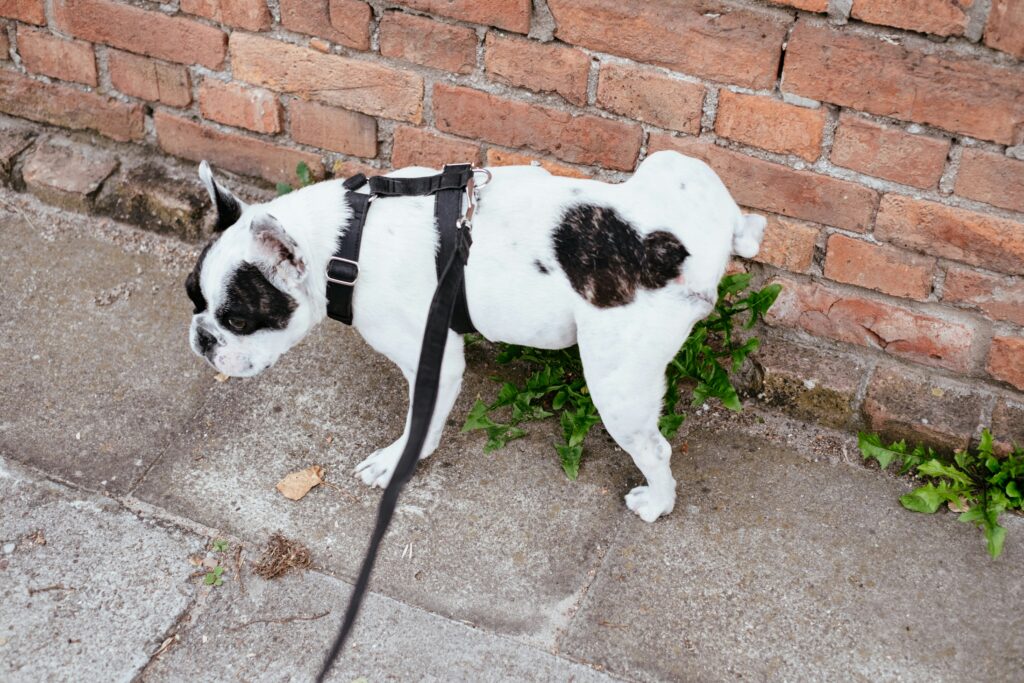
- Urinate during stressful events
- Have accidents when left alone
- Experience digestive upset during fear-inducing situations
Training-Related Accidents
These are more likely when:
- The dog is young
- House training is incomplete
- Bathroom routines are inconsistent
The context surrounding the accident often provides the answer.
Can Anxiety and Bad Behavior Occur Together?
Yes.
In fact, this is very common.
Consider a dog with separation anxiety.
Initially, it may bark because it feels distressed when left alone. Over time, the dog may discover that barking sometimes causes owners to return and provide attention.
Now the behavior has both emotional and learned components.
Similarly, a bored dog may develop stress due to chronic under-stimulation.
Behavior and emotion often influence one another.
This is why it is important to evaluate the entire situation rather than focusing on a single symptom.
How to Respond If Your Dog Has Anxiety
If anxiety is the root cause, the goal is to reduce fear and build confidence.
Helpful approaches include:
Create Predictable Routines
Dogs feel safer when daily activities follow a consistent schedule.
Increase Mental Stimulation
Puzzle toys, scent games, and training exercises help occupy the mind.
Provide a Safe Space
A quiet area can give your dog somewhere to retreat during stressful situations.
Use Positive Reinforcement
Reward calm behavior rather than punishing fearful reactions.
Gradual Desensitization
Slowly exposing dogs to triggers can help reduce sensitivity over time.
Consult a Veterinarian
Persistent anxiety may require professional guidance or treatment.
How to Respond If It’s a Training Issue
When unwanted behavior is not linked to anxiety, focus on teaching alternative behaviors.
Effective strategies include:
- Consistent household rules
- Daily exercise
- Structured training sessions
- Reward-based learning
- Mental enrichment activities
- Patience and repetition
Most behavior problems improve when dogs understand what is expected of them.
When Should You Seek Professional Help?
Professional assistance is recommended if your dog:
- Injures itself during anxious episodes
- Displays severe separation anxiety
- Shows fear-based aggression
- Experiences sudden personality changes
- Develops worsening symptoms despite intervention
A veterinarian can rule out underlying medical causes, while a certified dog behaviorist can design a customized treatment plan.
Frequently Asked Questions
Can anxiety make a dog seem stubborn?
Yes. An anxious dog may appear stubborn because fear prevents it from focusing or responding to commands.
Do dogs destroy things out of spite?
No scientific evidence suggests dogs act out of spite. Destructive behavior is usually linked to anxiety, boredom, stress, or learned habits.
Can a previously calm dog suddenly develop anxiety?
Yes. Aging, illness, trauma, environmental changes, or stressful experiences can trigger anxiety later in life.
Should I punish an anxious dog?
No. Punishment can increase fear and often worsens anxiety-related behaviors.
How can I tell if my dog has separation anxiety?
Signs include excessive barking, destructive behavior, house accidents, pacing, and distress that occurs specifically when left alone.
